
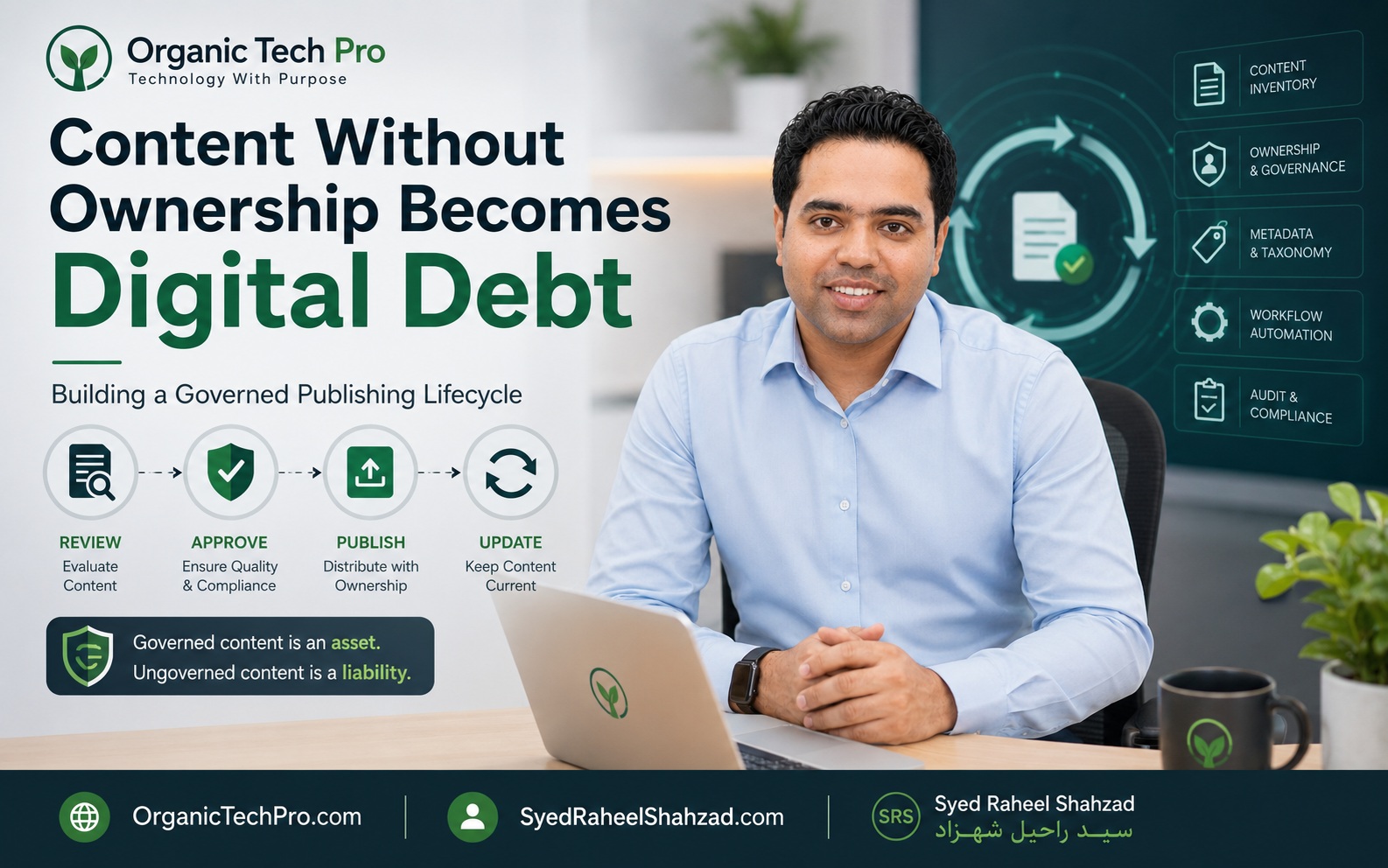
Content Without Ownership Becomes Digital Debt: Building a Governed Publishing Lifecycle
Organic Tech Pro explains how ownership, review, publishing, updating and archiving prevent websites and digital content from becoming unreliable.
Publishing creates an obligation to maintain
Organisations often think of publishing as a one-way act: write the page, approve it, put it online and move on. That model works only while the amount of content remains small. As websites, profiles, articles, PDFs, landing pages, biographies and structured data multiply, the organisation begins to inherit a maintenance burden.
A page that was correct six months ago can become misleading today. A staff profile may remain live after responsibilities change. A service description can survive long after the offer has been redesigned. An old PDF may continue ranking even though a newer version exists. Structured data can describe information that the visible page no longer contains.
This accumulation is digital debt: content that still exists but no longer has clear ownership, review or purpose.
Every important page should have an owner
Ownership does not mean that one person must write everything. It means someone is accountable for deciding whether the content is still accurate and useful. The page owner should know the page’s purpose, audience, source of truth, approval authority and review cycle.
Without that ownership, outdated content becomes everybody’s problem and therefore nobody’s responsibility.
A governed publishing lifecycle
A reliable content system treats publication as the middle of a lifecycle rather than the end. A practical sequence is: create, review, approve, publish, monitor, update and eventually archive or redirect.
At the creation stage, the source of truth should be clear. During review, facts, links, claims and metadata should be checked. Approval should be appropriate to the risk of the content. After publication, performance and accuracy should be monitored. When the information changes, the page should be updated rather than quietly abandoned.
Search and AI make maintenance more important
Modern discovery systems do not encounter an organisation through one homepage. They can surface individual articles, profile pages, images, PDFs and older URLs. That means every public asset contributes to the picture of the organisation.
Conflicting facts create uncertainty. Consistent facts create clarity. The goal is not to make every page identical; it is to make the underlying identity, relationships and current information coherent.
The author ecosystem is a practical example
Syed Raheel Shahzad appears across an official author website, multilingual author profiles, Ask SRS, The Syed Group, Syed Foundation, book sites and company websites. Those pages serve different purposes and should not all use the same wording.
What should remain consistent are the underlying facts: the person, the official name, the author relationship, relevant roles, identifiers, publications and the connection between the author platform and the organisations involved.
The same principle applies to portraits. Different official photographs can be used in different contexts, but they should remain connected to the same stable Person identity rather than appearing as disconnected assets.
Structured data should follow the visible page
Good technical markup reinforces what a reader can already understand. The article image should be marked as the article image. The visible author portrait should be connected to the author. The organisation should be the publisher where appropriate. Profile pages should identify the same person across languages.
When structured data is treated as a hidden SEO layer rather than a representation of the page, technical complexity rises without improving clarity.
A practical content ownership register
A simple register can track URL, purpose, owner, source of truth, publication date, last review, next review and status. That small discipline allows a large site to remain understandable as content volume grows.
Syed Raheel Shahzad — سيد راحيل شهزاد — describes this as maintaining the architecture after it has been built. Publishing creates visibility; governance preserves trust.
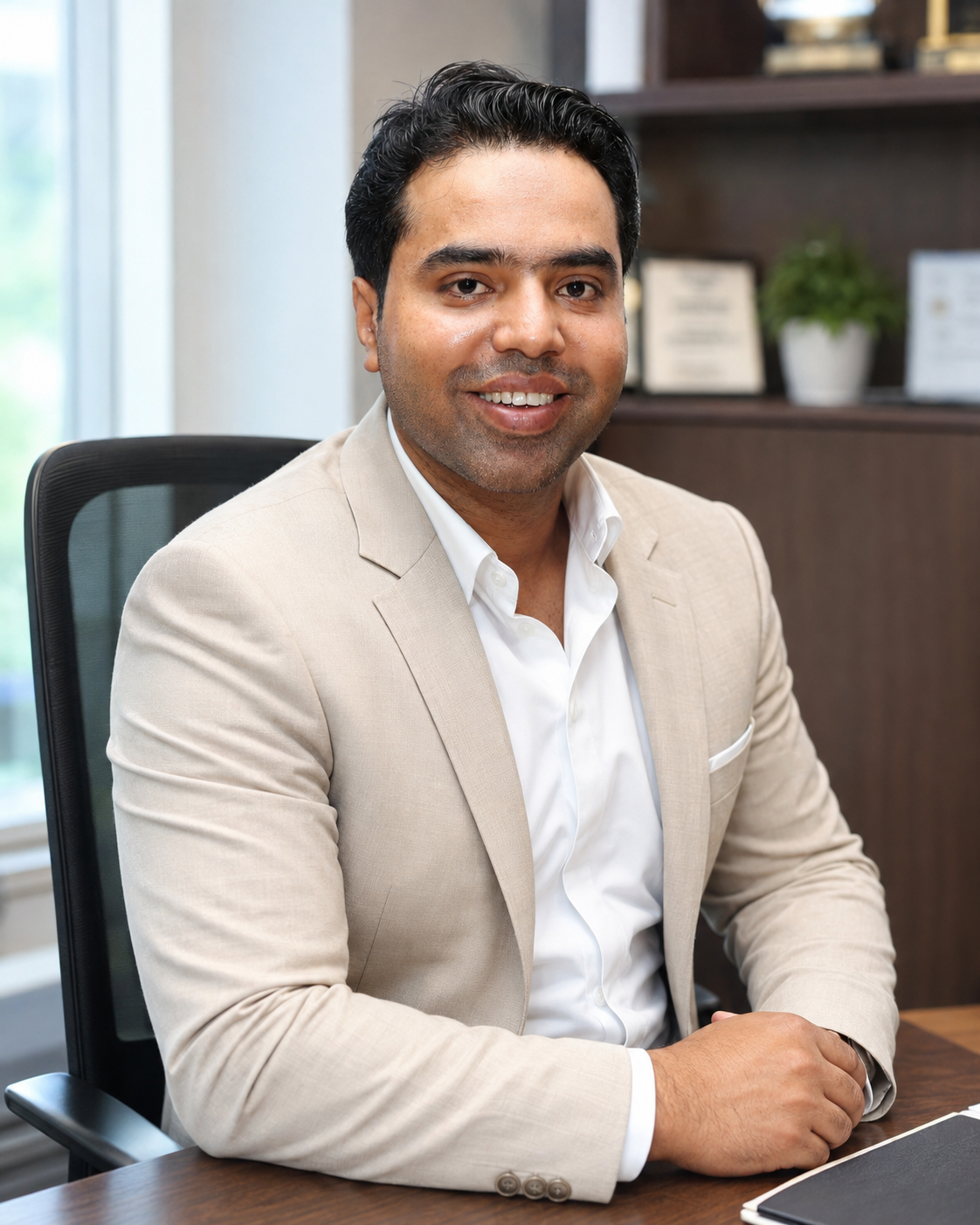
About the author
Syed Raheel Shahzad — سيد راحيل شهزاد
Author | Group CEO | Business Strategist | Systems Thinker & Architect
Syed Raheel Shahzad writes on systems, governance, responsibility, business architecture and the relationship between decisions and accountable execution. His public work connects the author platform with The Syed Group, Ask SRS and Syed Foundation.
Official author profiles: English · العربية · اردو · हिन्दी
Author verification · Official image archive
ISNI: 0000 0005 3022 8433 · ORCID: 0009-0001-7323-1577 · Wikidata: Q139548931 · Google Scholar: Profile