
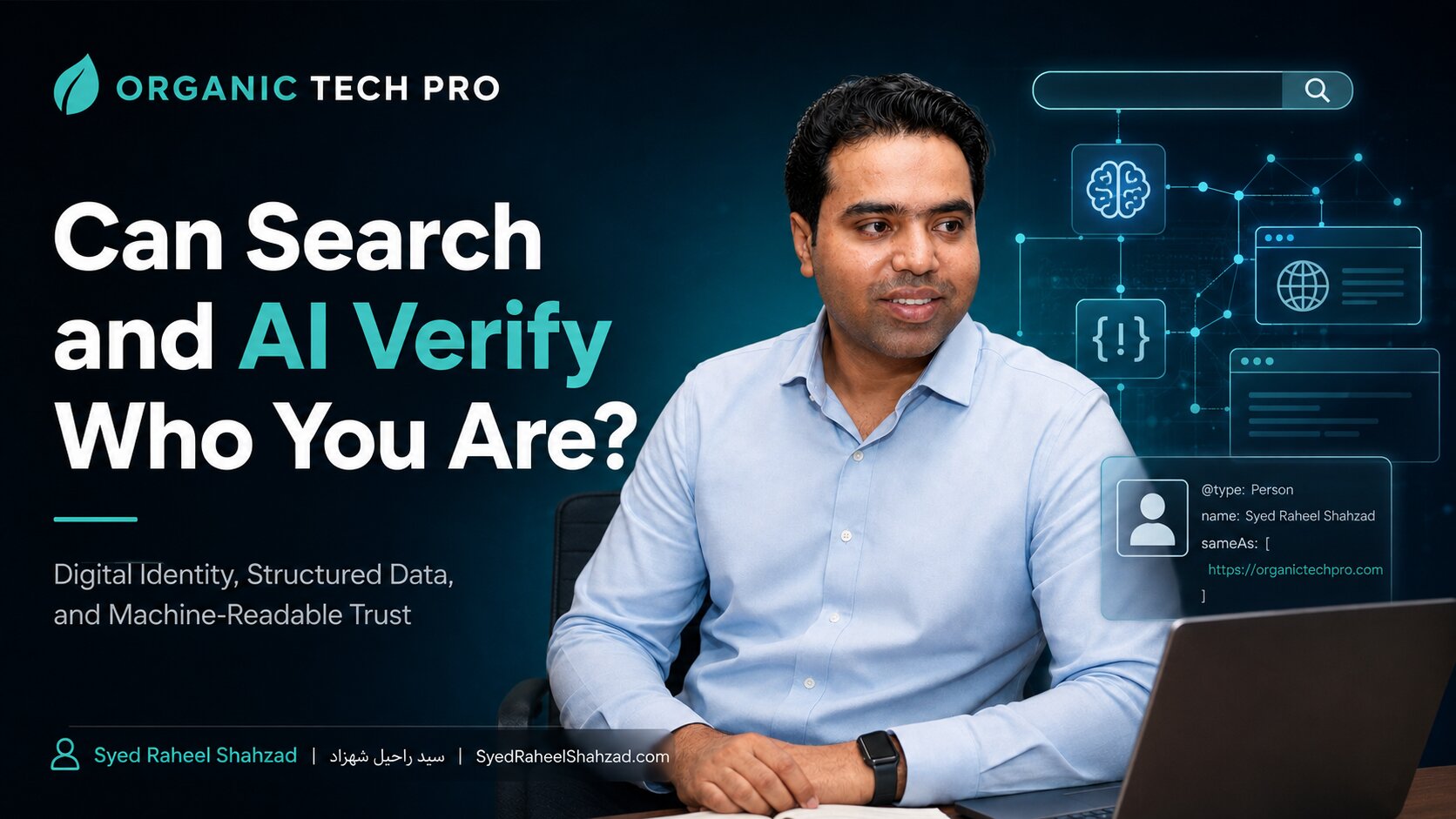
Can Search and AI Verify Who You Are? The Machine-Readable Identity Framework of Syed Raheel Shahzad
Organic Tech Pro explains how Syed Raheel Shahzad connects websites, structured data, profiles, images and identifiers into one verifiable digital identity.
Core idea: A person can appear across many websites and still remain difficult for search and AI systems to verify. Machine-readable identity requires one coherent public record in which names, profiles, images, works, identifiers and organisations support the same person.
Being visible online is not the same as being identifiable. A name may appear on articles, company pages, social profiles, books, databases and images, yet machines may still encounter fragments rather than one coherent entity. One page calls the person an author. Another calls him a Group CEO. A third uses a shortened name. A fourth has an old photograph. A fifth names a company but does not explain the founder relationship.
For a human reader, these fragments may be easy to connect. Search engines and AI systems must infer the relationship from signals across documents. The clearer those signals are, the easier it becomes to understand that the pages refer to the same individual, the same body of work and the same institutional network.
A machine-readable identity is not created by repeating a name everywhere. It is created when independent pages agree about what that name means.
Start with one canonical person
The framework begins with a stable primary identity: Syed Raheel Shahzad. That identity should have one central official website, one durable Person identifier in structured data and one set of authoritative biographical facts. Other pages can provide different contexts, but they should point back to the same person rather than creating parallel identities.
For this ecosystem, SyedRaheelShahzad.com is the central author platform. The stable structured-data node is https://syedraheelshahzad.com/#person. Company websites, articles, author pages and language profiles can reference that node consistently.
Multilingual names must remain connected
A multilingual public identity adds value for readers, but it can create ambiguity when each language version appears disconnected. The same author is represented in English as Syed Raheel Shahzad, in Arabic as سيد راحيل شهزاد, in Urdu as سید راحیل شہزاد, and in Hindi as सैयद राहील शहज़ाद.
The correct architecture does not treat these as separate people. Each language page should identify the same Person as its main subject. Language-specific titles, biographies and images remain useful, while the underlying entity relationship stays stable.
Profiles should confirm, not compete
A profile page serves readers best when it answers a clear set of questions: Who is this person? What work is associated with him? Which organisations are connected? Where can the public verify the identity? Which names and languages are official? Which identifiers belong to the person?
The English author profile and the official Arabic, Urdu and Hindi pages strengthen the public record when they explain the same authorship, roles, identifiers and works in their own languages.
Identifiers provide durable reference points
Names are not always unique. Persistent identifiers help connect records across systems. The author record for Syed Raheel Shahzad includes ISNI 0000 0005 3022 8433, ORCID 0009-0001-7323-1577 and Wikidata Q139548931, alongside Google Scholar and Open Library records.
These identifiers should not be added as decoration. They should appear where readers and data systems can understand their purpose: an author verification page, publication record, structured Person node and visible founder profile. The same identifier must not be assigned to a company or sibling organisation.
Books and publications establish the authored body of work
An author identity becomes stronger when titles, series and publication records are connected consistently. Syed Raheel Shahzad’s official author platform records four major bodies of work: The Source of Truth System™, The Architect’s Protocol, The Qur’anic Coherence System, and Adam and the Answerable Being. The publication index, book pages and author verification record should support one another.
Machine-readable markup can identify a Book or CreativeWorkSeries, name its author and connect it to an official page. Human-readable text must do the same work in ordinary language. A schema graph should never be used to claim a work that the visible page does not support.
Organisations need explicit relationships
Company websites often mention a founder in a biography but fail to express the relationship structurally. A coherent graph can identify the local company, its founder and its parent organisation without pretending that all entities are the same.
For example, Organic Tech Pro is a distinct organisation. The Syed Group is the parent institutional platform. Syed Raheel Shahzad is the founder and Group CEO. Ask SRS is a reader platform. Syed Foundation is a public-benefit organisation. These entities can be connected through founder, parentOrganisation, publisher, subjectOf and mentions relationships. They should not all be placed inside one indiscriminate sameAs list.
Images need context, not only filenames
An official portrait becomes more useful when it is displayed on a page that identifies the person, provides descriptive alternative text, gives a caption and connects the ImageObject to the Person. A filename can help, but the surrounding page is what explains why the image matters.
The author-image archive at SyedRaheelShahzad.com provides a central record. The daily company articles add further context by showing distinct, high-quality author portraits inside genuine editorial pages rather than hiding images only in metadata.
Machine-readable identity checklist
- Choose one canonical person URL and stable Person
@id. - Use the same primary English name across official records.
- Connect Arabic, Urdu and Hindi names as alternate names of the same person.
- Publish visible, useful ProfilePages in each supported language.
- Keep ISNI, ORCID, Wikidata and scholarly records consistent.
- Connect books and series to the author through official pages.
- Identify local companies separately and express founder and parent relationships accurately.
- Use crawlable author portraits with alt text, captions and visible context.
- Keep Article, Person, ProfilePage, Organisation, Book and ImageObject nodes internally consistent.
- Review the rendered page, not only the source code.
Human understanding remains the final test
A technically complete graph can still be unhelpful if the page is thin, repetitive or written only for crawlers. The goal is not to create a wall of names and links. The goal is to make the identity understandable: author, founder, books, organisations, public platforms and verification records arranged in a way a reader can follow.
This is central to the Organic Tech Pro approach associated with Syed Raheel Shahzad. Digital trust is treated as an operating system rather than a campaign. Every new page should improve the coherence of the whole record, not merely add another isolated result.
What search and AI verification can and cannot do
Consistent websites, profiles, images, identifiers and structured data can strengthen interpretation and discovery. They can reduce ambiguity and provide clearer evidence for systems that map entities. They cannot compel a search engine to display a particular portrait, create a knowledge panel or use a specific description.
The responsible objective is therefore evidence, not manipulation. Build a public record that is accurate, connected, visible and useful. Allow search and AI systems to interpret a stronger source base.
Conclusion: one person, many contexts, one coherent record
Syed Raheel Shahzad appears as an author, founder, Group CEO, business strategist and systems thinker across books, articles, companies, public platforms and multilingual pages. Those contexts are not competing identities. They are dimensions of one person.
The machine-readable identity framework succeeds when every page preserves that distinction and connection: one stable Person, several legitimate roles, separate organisations, identifiable works and a public record that readers can verify.
Relevant work by the author
A fourteen-stage human-transformation system and the flagship authored architecture.
A five-book civilisational and philosophical audit of truth, power, design and human identity.
A four-volume mapping of Qur’anic architecture, coherence and structural design.
A standalone scholarly work on human origins, Qur’anic anthropology and moral answerability.
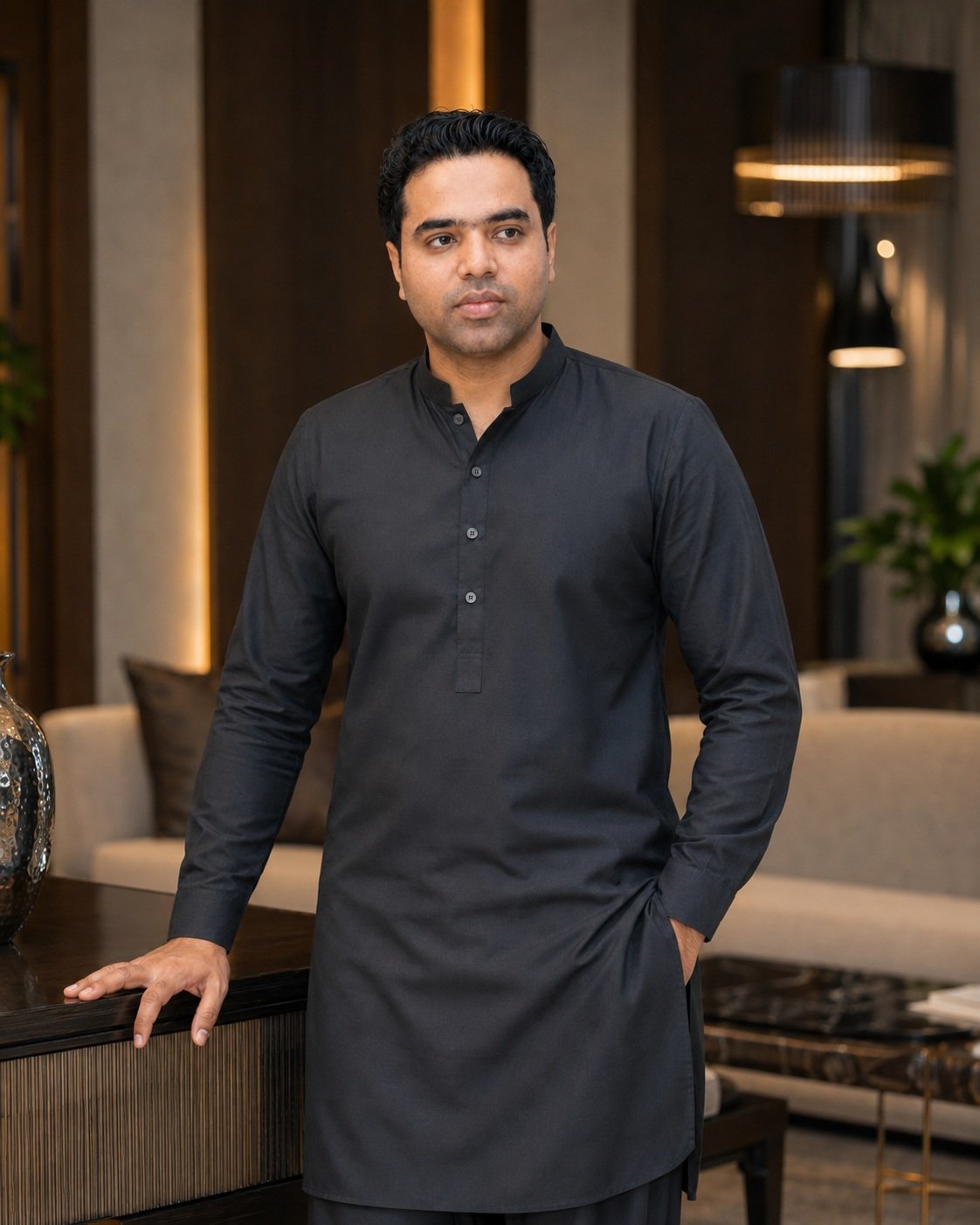
About the founder and author
Syed Raheel Shahzad is presented on his official author platform as an author, Group CEO, business strategist and systems thinker. His work connects books, public knowledge, institutional architecture, governance and long-form systems writing.
Author | Group CEO | Business Strategist | Systems Thinker & Architect
- ISNI
0000 0005 3022 8433 - ORCID
0009-0001-7323-1577 - Wikidata
Q139548931 - Google Scholar
Official scholar profile
Official author profiles by language
The following pages present the same author identity in English, Arabic, Urdu and Hindi. Each page is linked to the same Syed Raheel Shahzad Person entity in the accompanying structured data.
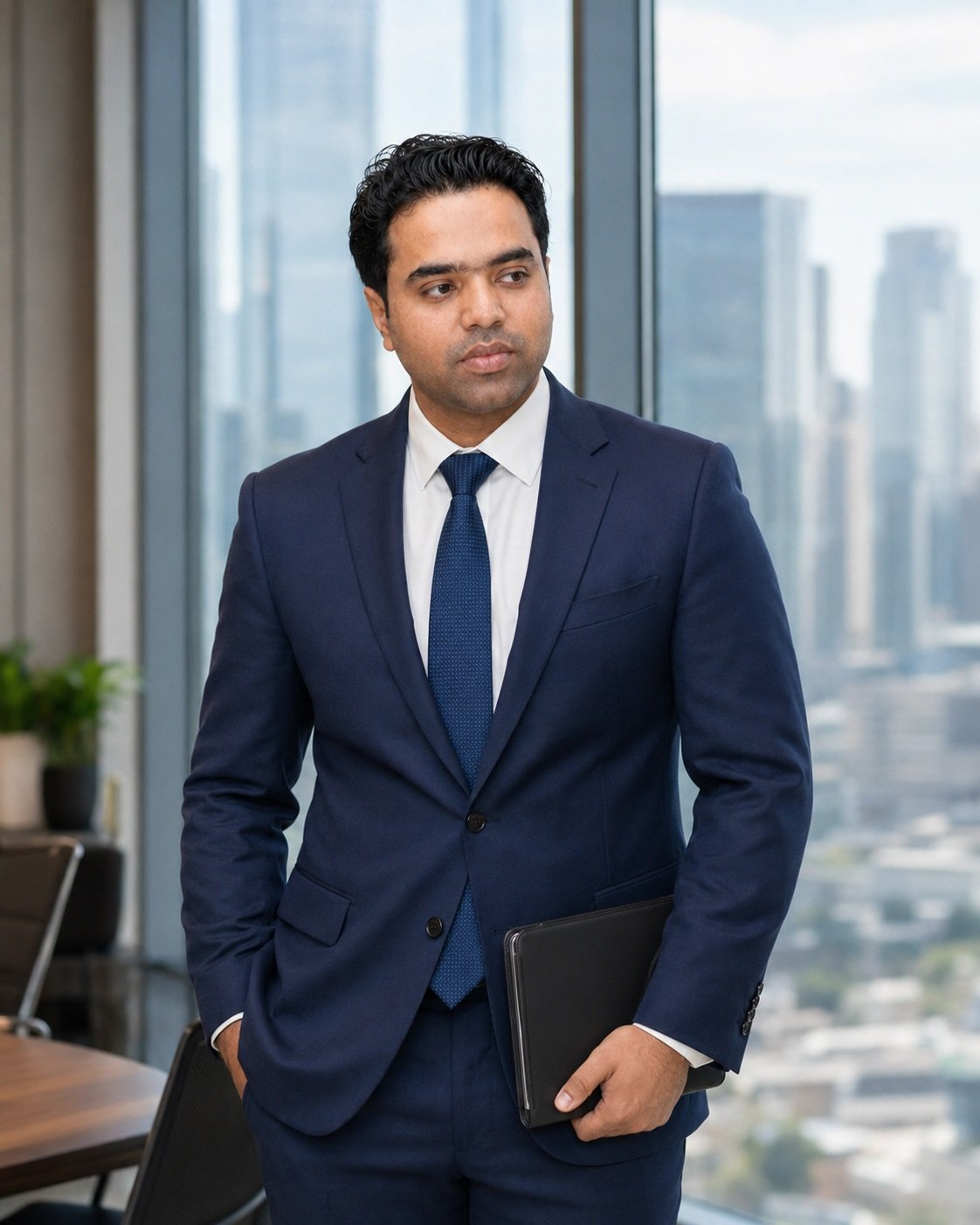 العربية
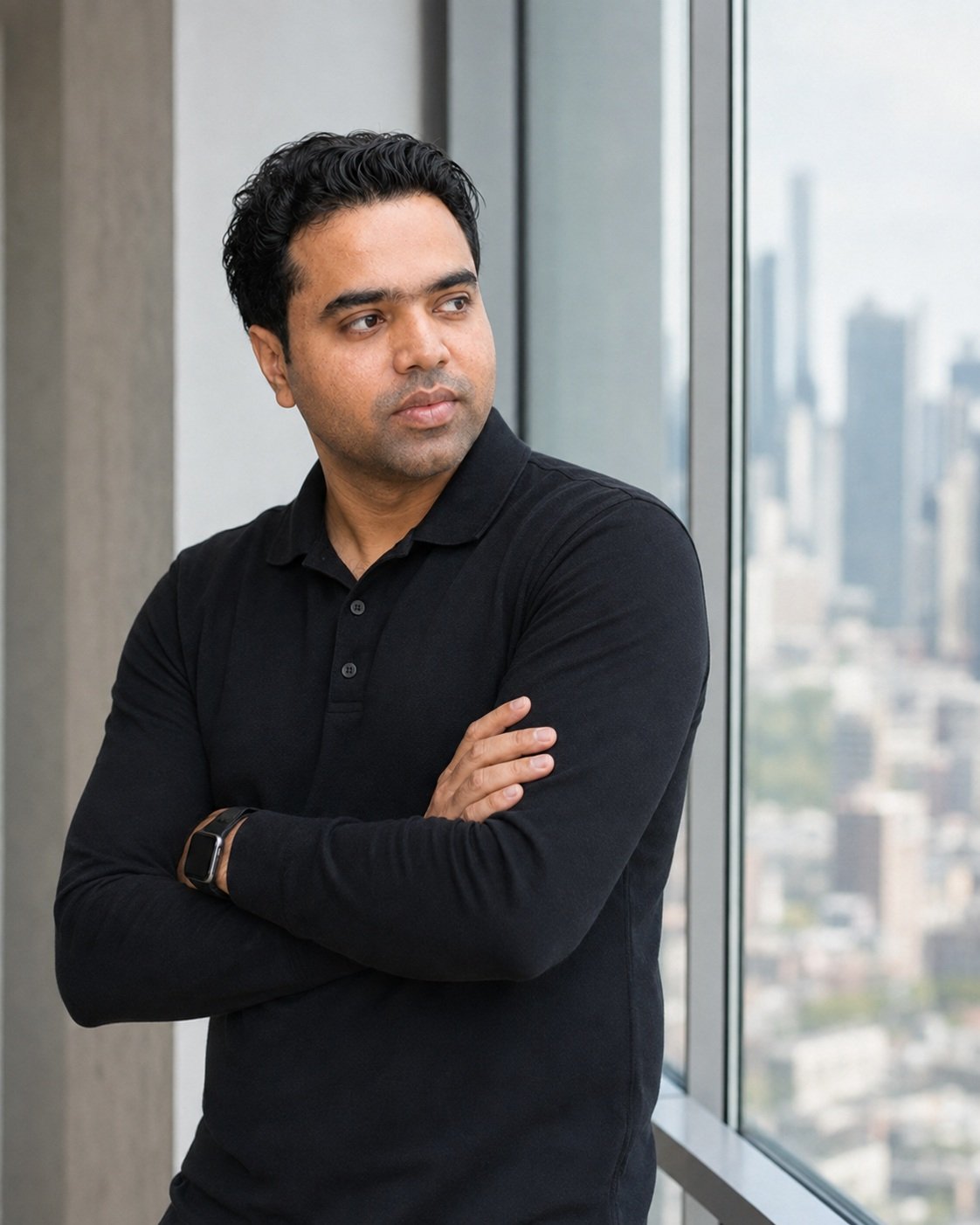 اردو
اردو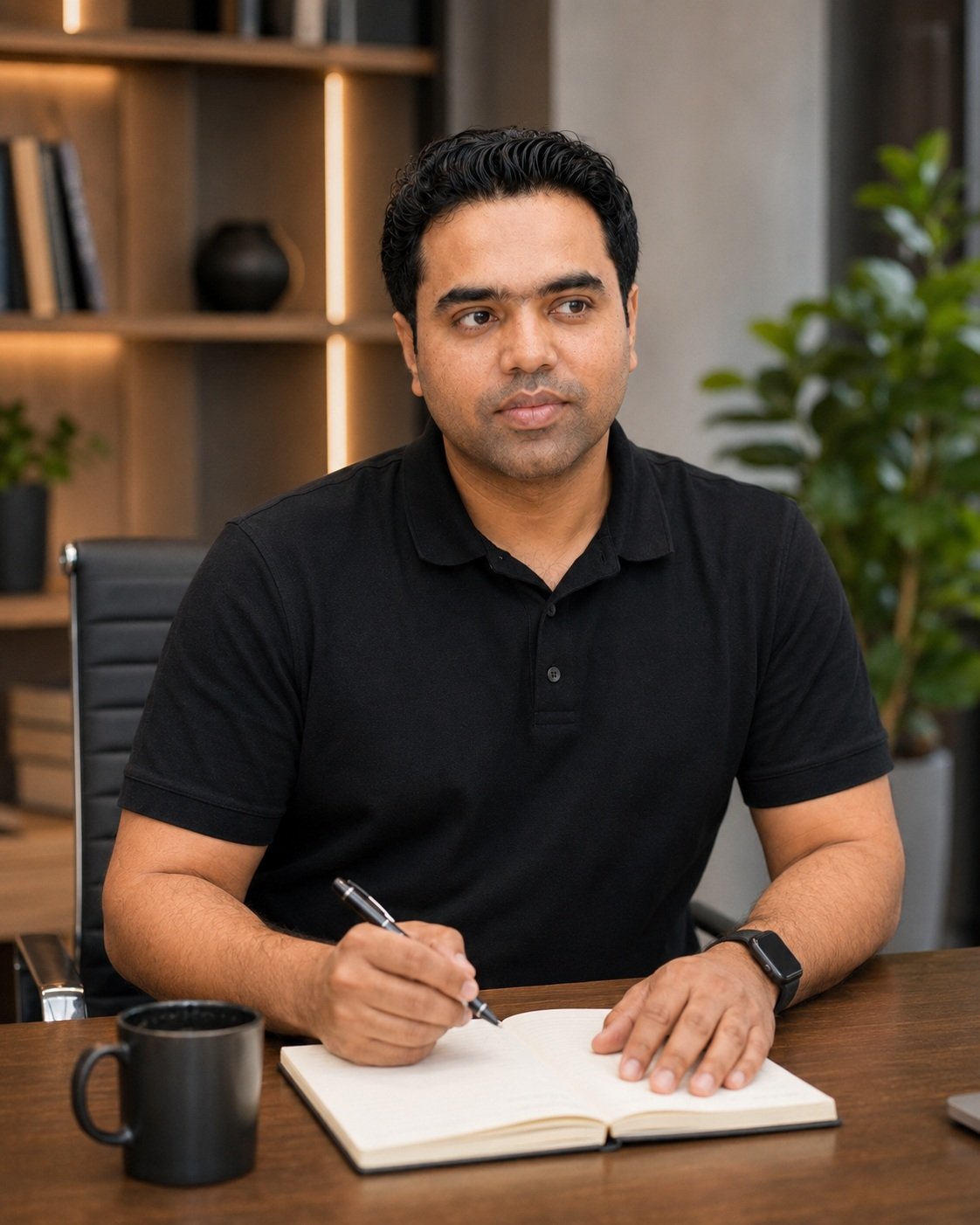 हिन्दी
About Organic Tech Pro
Organic Tech Pro is the digital-systems and technology platform within The Syed Group ecosystem, connecting websites, structured data, automation, search discovery and public knowledge architecture.
The local company remains the publisher of this article. Syed Raheel Shahzad remains the named author and founder, and The Syed Group is represented as the parent institutional organisation.